


News and Press
Building inclusion for disabled adults
As printed in the Traverse City RECORD-EAGLE - April 4, 2026
We pride ourselves on being a welcoming, close-knit community. Yet there is a group of our neighbors too often left on the margins: Adults with intellectual and developmental disabilities (IDD). They live here, shop here, vote here, and walk our sidewalks — but many do so in quiet isolation.
Better Together’s Activity Club is working to change that, offering a place to belong, connect, and thrive.
There is no better time to commit to meaningful inclusion in our own backyard.
The need is real — and closer than many realize. In Michigan, more than 6% of adults are living with a developmental disability. That includes people right here in Northern Michigan.
In a rural region like ours, the challenges are often greater – services are spread out, transportation is limited, and opportunities for consistent social connection can be few and far between. For many, simply getting to a program can be a barrier.
Too often, this leads to long, unstructured days with few chances to build friendships or participate in community life. Adults with IDD are significantly more likely to experience chronic loneliness, social isolation, depression, and poorer physical health. In rural communities, where distances are greater and resources are fewer, that isolation can deepen.
Michigan has affirmed that people with developmental disabilities deserve the opportunity to live independently, be included in the community, and exercise control over their lives. But inclusion does not happen by accident — especially in rural areas. It requires intentional, local solutions that bring people together and make participation possible.
That is exactly what Better Together is doing for Northern Michigan.
Better Together is more than a program, it is a lifeline. It is a place where adults with intellectual disabilities can build friendships, discover purpose, and experience the joy of belonging. Through social and recreational opportunities – art, music, fitness, cooking, and community outings – long, empty days are transformed into meaningful ones. Members have a place to go, people who know them, and a routine that fosters connection.
Just as importantly, Better Together serves as a bridge into the broader community. Activities extend into local parks, libraries, coffee shops, and community spaces. Members volunteer, partner with businesses, and participate in civic life. That visibility matters. When people with disabilities are seen contributing and participating alongside others, barriers begin to fall and true inclusion takes root.
The impact extends beyond participants. Families gain peace of mind knowing their loved ones are safe and engaged. Local organizations gain dedicated volunteers and loyal patrons. And our community becomes stronger — more inclusive, more connected, and more reflective of the values we claim to hold.
Traverse City and the surrounding rural communities have the heart to make this work sustainable. What’s needed now is commitment — from nonprofits, businesses, local leaders, and residents who understand that this is not someone else’s issue. It is ours.
More than 6% of Michigan adults are living with a developmental disability. They are part of this community, and they should not have to navigate isolation simply because of where they live.
Better Together’s message is simple: You belong here.
In Northern Michigan, we believe in neighbors helping neighbors. Better Together is not just a good idea — it is a responsibility.
Let’s live up to that belief and ensure our community truly includes everyone.
About the author: Kate Mead is board chair of Better Together.
HAVE YOU SEEN OUR BILLBOARD IN TRAVERSE CITY?
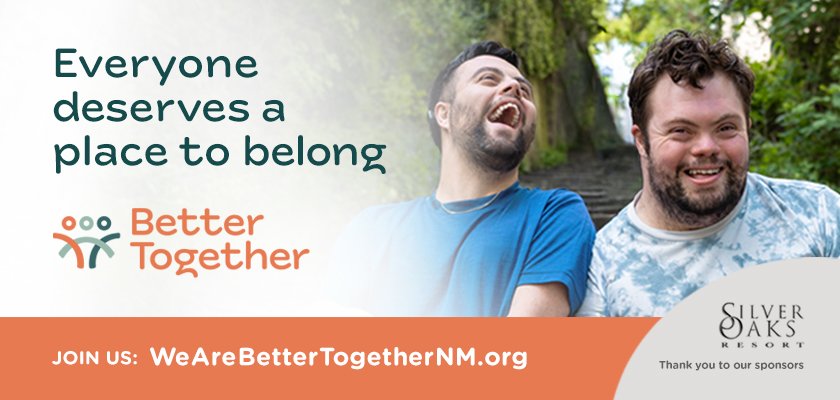
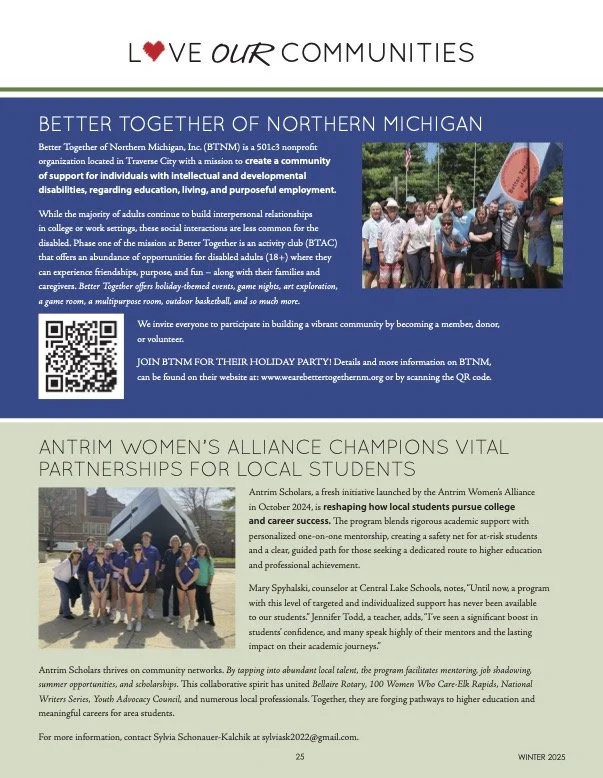
Check out our article in Traverse Bay Lifestyle magazine - December 2025
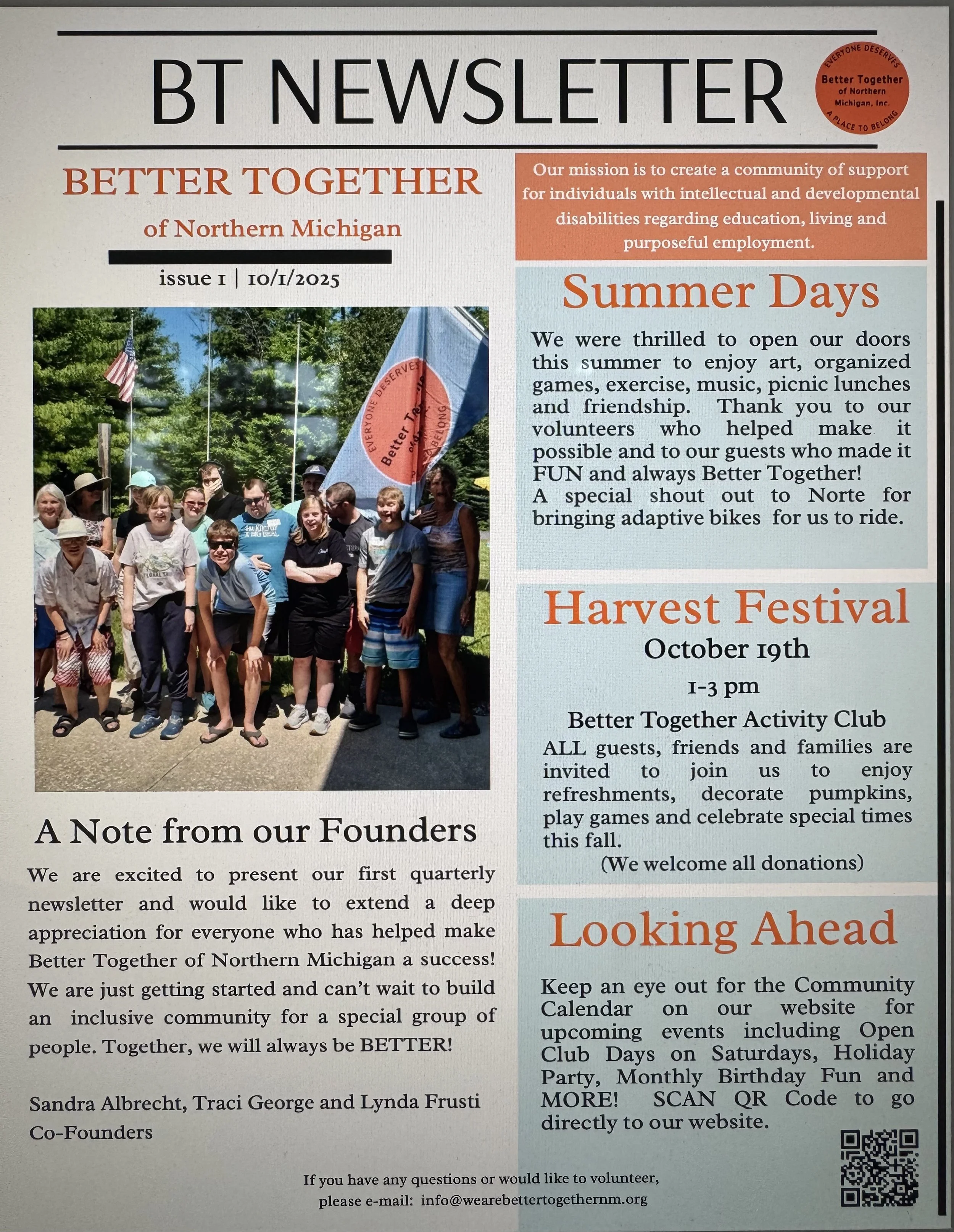
BT Newsletter
October 2025
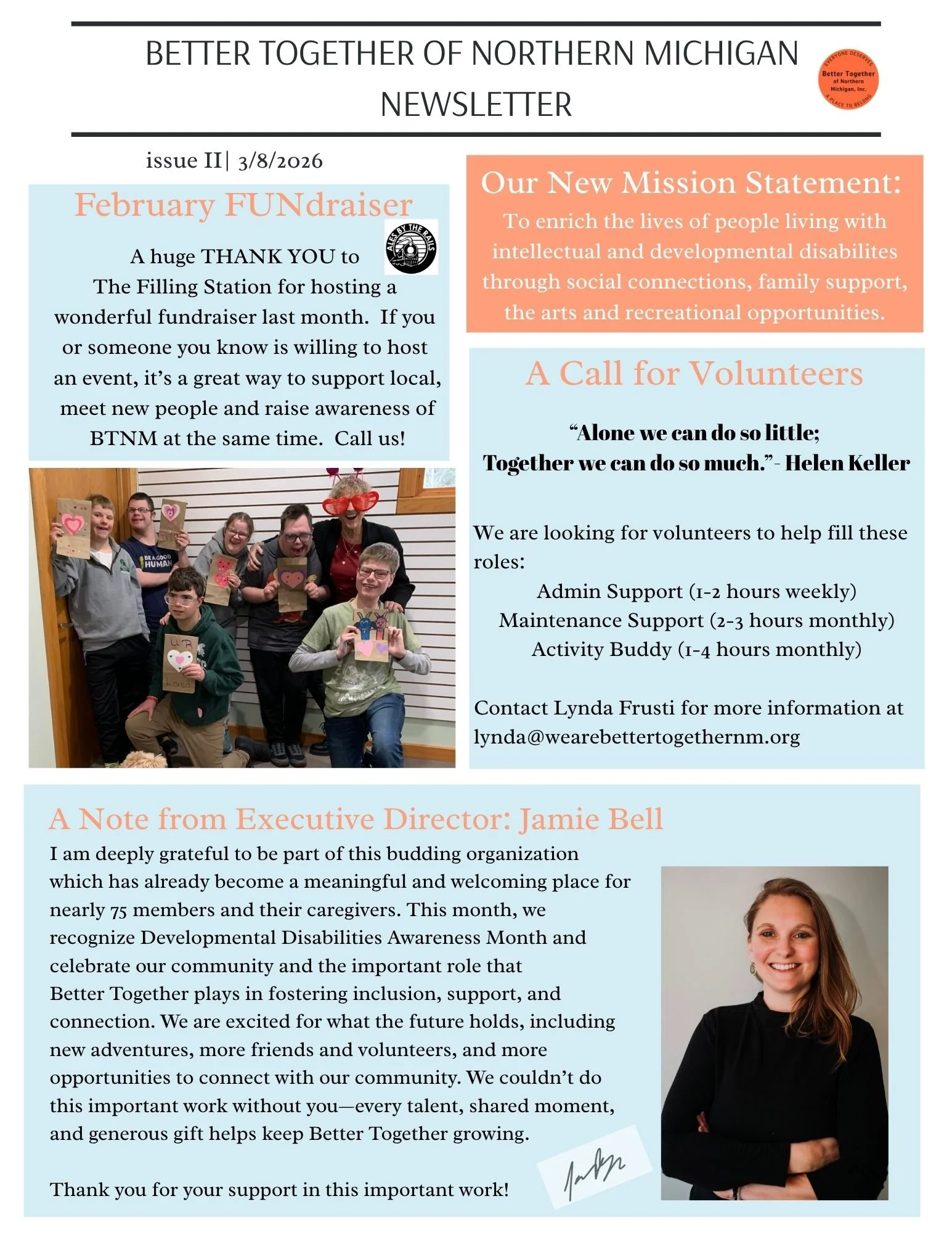
BT NEWSLETTER
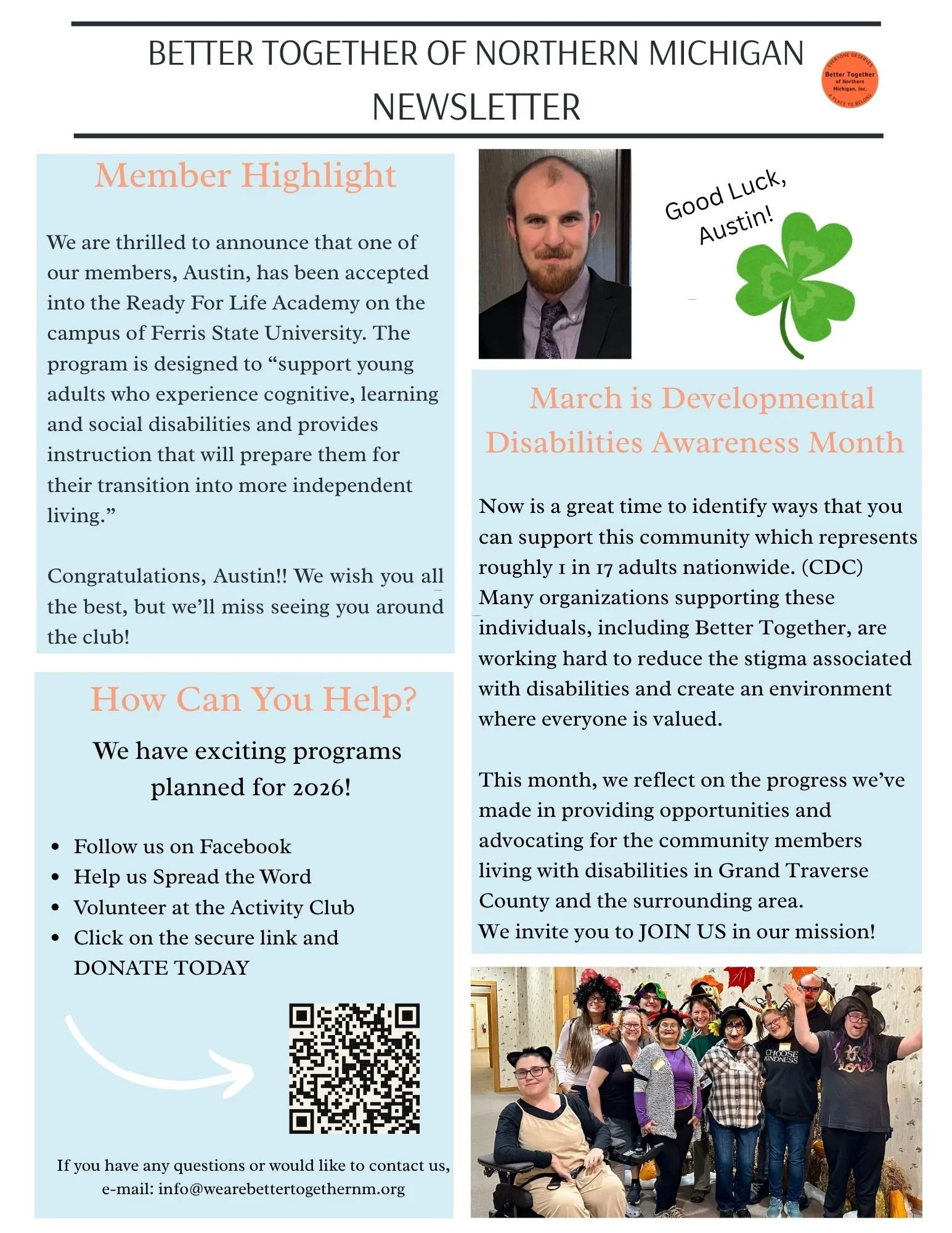
MARCH 2026
New Better Together Activity Club For Adults With Intellectual and Developmental Disabilities Invites
Community to a Sneak Peek
TRAVERSE CITY – Founders of the Better Together Activity Club for adults with disabilities are inviting community members to visit their new property in East Bay Township at two sneak peek events June 22 and July 20.
Located in a former Boy Scout lodge-style property at 1499 Business Park Drive, the BTAC is aimed at filling a social void that exists for adults 18 and over with disabilities including autism, Down syndrome, and intellectual and cognitive disabilities. The sneak peeks will be held from 10 am-noon and 2-4 pm both June 22 and July 20.
Founders Traci George, Lynda Frusti and Sandy Albrecht-Conrad believe that “everyone deserves a place to belong.” These underserved adults in our community rarely attend social events outside their families. Our members will feel loved, invited, and safe, without labels.”
These women have been informally discussing how to improve their children’s quality of life for several years. Their conversations gradually evolved into the idea of an activity club, where friendships are nurtured, special events are celebrated, and a calendar of activities and recreational opportunities that reflect their interests is offered.
Seeking a location, the women were introduced to local Realtor Bob Brick, who had listed the former Boy Scout property. Brick introduced the trio to Wayne Kiley, a benefactor who was willing to purchase the building and lease it to the group for a year while they raise the money to buy it from him.
“It was such a God-given opportunity. We are so thankful to Wayne,” said Albrecht-Conrad. The arrangement allows them to use the space while they build the organization as a non-profit and fundraise. They envision a membership structure where members pay a small fee, perhaps subsidized by donations. Activities could include anything from movie nights and birthday parties to outdoor activities on the 4-acre property.
Statistics from Erik W. Carter, a Baylor University researcher who focuses on strategies for promoting participation, belonging and valued roles for people with intellectual and developmental disabilities, say that 44 percent of autistic people never see friends outside school, and 51 percent have not attended a peer social event in the last year.
The sneak peeks are a chance to see the BTAC property, sign up for future work bees and other volunteer opportunities, or donate.
Release Date: June 19th, 2024
Redirect quickly to our Home page.